roman.kazicka@agnicoli.org
+421.918.901.732
  • Systémové myslenie v IT a Digitálna Fabrikácia
      • 2017-2018
      • 2018-2019
          • 2018-2019-Študenti
      • 2019/2020
          • Študenti
          • Projekty
              • 2019_P01
              • 2019_P02
              • 2019_P03
              • 2019_P04
              • 2019_P05
              • 2019_P06
              • 2019_P70
              • 2019_P08
              • 2019_P09
      • 2020/2021
          • 2020/2021-Studenti
          • 2020/2021-Projekty
      • 2021/2022
          • 2021-2022-Študenti
          • 2021-2022-Projekty
      • 2022/2023
          • 2022/2023-Studenti
          • 2022/2023-Projekty
      • 2023/2024 2023/2024
  • Prednášky
  • Systémové myslenie pri tvorbe IoT riešení
  • Kurzy
  • Workshopy
  • Kybernetické riešenia - Kybernetickým spôsobom
      • Finančná gramotnosť v inteligentných riešeniach-úvod
  • Nachádzate sa tu:  
  • Systémové myslenie v IT a Digitálna Fabrikácia
  • 2022/2023

2022-2023-STHDF

S13-2022

Hodnotenie používateľov: 4 / 5

 #  Položka Popis  linka
 1  Predstavenie  About Me  https://fiit.agnicoli.org/GtHS6
 2  Príspevok do vedomostnej databázy  Knowledge Contribution  https://fiit.agnicoli.org/LSsOhs
 3  Základné informácie o projekte  Project Summary  https://fiit.agnicoli.org/LUOpbp

About Me

My name is Miroslav Pavlák and I am student of information security at FIIT STU interested in computer forensic, malware analysis and penetration testing.

I love to spend free time doing some sports (trail running, MTB, XCS, skimo, swimming or calisthenics), building and flying FPV drones, making traditional wooden bows, reading books or listening music (Norwegian folk, Metalcore).

I chose System thinking in IT as subject because I am interested in 3D modeling and 3D printing, which I wanted to try, because I have zero experience with 3D printing and modeling.

Knowledge Contribution

My knowledge contribution, which is available here, represents brief overview about FPV drones, what they are, different types of FPV drones, components of FPV drones and how to get started with FPV drones.

Project Summary

The main vision of our semester project was to make finding discharged or lost drones easier with a few cheap parts.

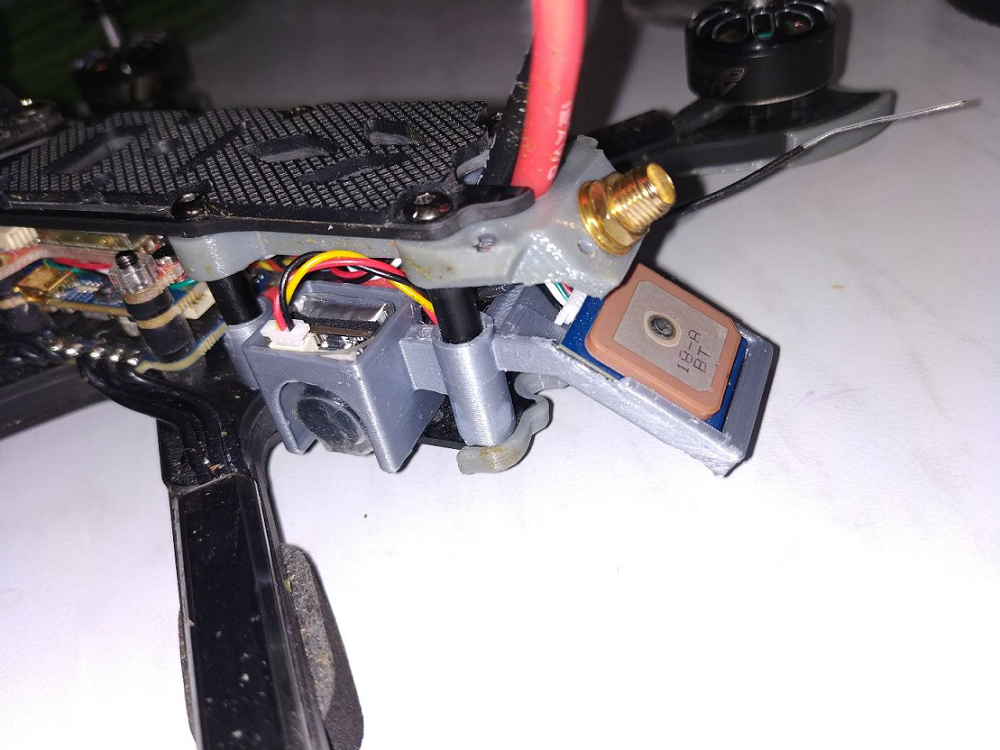
Our solution consist of GPS module Beitian BN-220 and buzzer JHE42-S with external battery. According to GPS location information it will be easy for FPV pilot to localize dischared or crashed drone and thanks to beeping of buzzer with external battery it makes easier to find drone in a dense forest, bush or in a snow. Our project summary is available here and more information about our project can be found here.

gps_buzzer_holder_model.PNG

 gps_buzzer_holder.png


  • Návštevy: 600

S04-2022

 #  Položka Popis  linka
 1  Predstavenie  About Me  https://fiit.agnicoli.org/gEYfB
 2 Príspevok do vedomostnej databázy  Knowledge Contribution  https://fiit.agnicoli.org/LVBY7p , https://fiit.agnicoli.org/Jxwys
 3  Základné informácie o projekte  Project Summary  https://fiit.agnicoli.org/4O82t

 About Me

Som študentom 2. ročníka na inžinierskom štúdiu na FIIT STU BA. Tento predmet som si vybral najmä kvôli možnosti vytvoriť niečo, čo je uchopiteľné, narozdiel od softvéru, s ktorým som v kontakte najviac. Medzi moje záľuby vo voľnom čase patria z najväčšej časti filmy a seriály, ale rád si tiež niečo zahrám.


Knowledge Contribution

Môj hlavný vedomostný príspevok predstavuje oblasť vývoja PC hier (Game development) v herných enginoch. Dôvod výberu je ten, že okrem hrania hier ma vždy zaujímalo ako taká hra vzniká. V krátkosti som rozobral 2 najznámejšie enginy, Unity a Unreal Engine. Z hľadiska osobných skúseností som si vyskúšal vývoj práve v prostredí Unity.


Project Summary

Naším projektom, skrz spoločné záľuby, sa stala miešačka hracích kariet (napr. pokrové karty). Cieľom je zabrániť nečestnému miešaniu kariet a teda zachovanie fair-play v hre. Táto miešačka kariet funguje na princípe už existujúcich riešení ako na videu nižšie: 

.

Naša finálna verzia spomínaného CardShufflera vyzerá takto:

Zlozeny CardShuffler


Cesty k jednotlivým diagramom v prostredí Enterprise Architect:

  • Cesta k diagramu About Me: 02.APV-Assets-Perspectives-Views.2022-2023-APV - Assets - Perspectives - Views-2022-2023.2022-02.Model of Instances.01.Assets.PCG_0148_01.Business.02.PCG_0273_Deliverables.PCG_0233_01.Deliverables FOR STH.PCG_0236_01.About Me.PCG_0170_02.Students.S04.S04-AboutMe
  • Cesta k diagramu Game Development: STHDF-2022-2023.02.Students.S04 | AG.03.D3-Analysis.PCG_0316_S04-GameDevelopment.PCG_0316_S04-GameDevelopment
  • Cesta k diagramu Ozubene kolesa: STHDF-2022-2023.02.Students.S04 | AG.03.D3-Analysis.PCG_0343_S04-OzubeneKolesa.PCG_0343_S04-OzubeneKolesa
  • Cesta k diagramu Project Summary: 02.APV-Assets-Perspectives-Views.2022-2023-APV - Assets - Perspectives - Views-2022-2023.2022-02.Model of Instances.01.Assets.PCG_0148_01.Business.02.PCG_0273_Deliverables.PCG_0233_01.Deliverables FOR STH.PCG_0238_03.Project Summary.PCG_0170_02.Students.S04.S04-ProjectSummary
  • Návštevy: 674

s06-2022

 #  Položka Popis  linka
 1  Predstavenie  About me  https://fiit.agnicoli.org/7EIdrD
 2 Príspevok do vedomostnej databázy  Knowledge Contribution https://fiit.agnicoli.org/LpkyJf
 3  Základné informácie o projekte  Project Summary  https://fiit.agnicoli.org/4O82t


About Me

Volám sa Marián Jarník a momentálne som študentom 2. ročníka inžinierskeho štúdia na FIIT STU. Popri štúdiu pracujem v Slovenských elektrárňach ako dátový analytik. Medzi moje záľuby patrí predovšetkým športovanie (cyklistika, futbal, hokejbal, florbal, šach, poker) a sledovanie filmov a seriálov.

Knowledge Contribution

V mojom Knowledge contribution som sa zameral na jadrovú energiu a jej (ne)ekologickosť. Tému som si vybral, pretože si myslím, že niektorí ľudia stále odmietajú jadrovú energiu a pritom sa jedná o jeden z najefektívnejších a najekologickejších spôsobov výroby elektrickej energie.

Project Summary

V projekte sme v tíme vyrábali automatickú miešačku kariet.

Link: https://agnicoli.org/_sub/prod/sk/systemove-myslenie-v-it-a-digitalna-fabrikacia/2022-2023/2021-2022-projekty-2/213-p01-2022-s04-s06-s07


  • Návštevy: 645

S07-2022

 #  Položka Popis  linka Full EA path
 1 Predstavenie About Me (below)  
 2 Príspevok do vedomostnej databázy Knowledge Contribution - Randomness and Fairness
in Card Shuffling, Coin Tossing and Dice Rolling
https://fiit.agnicoli.org/mT3Id STHDF-2022-2023.02.Students.S07 | RK
.03.D3-Analysis.PCG_0286_S07-KnowledgeContribution
.PCG_0286_S07-RandomnessAndFairness_CardsCoinsDice
 3 Základné informácie o projekte Project Summary - P01-S04-S06-S07-CardShuffler https://fiit.agnicoli.org/Rm8qg 02.APV-Assets-Perspectives-Views
.2022-2023-APV - Assets - Perspectives - Views-2022-2023
.2022-02.Model of Instances
.01.Assets.PCG_0148_01.Business
.02.PCG_0273_Deliverables.PCG_0233_01
.Deliverables FOR STH.PCG_0238_03
.Project Summary.PCG_0170_02
.Students.S07.P01-Project Summary


S07 - Róbert Karpiel

About Me

Name: Róbert Karpiel

Faculty: FIIT STU BA
Study program: I-IS2 Intelligent Software Systems
Year: 2 (Ing.) / 5 (Bc. + Ing.)
Bachelor's / Master's thesis focus: Intelligent agents for RTS games (StarCraft), neural networks

Employment: Junior Developer @ [...] Slovakia
Interests: video games (PC) and modifications (creation, translation), TTRPG (Actual Play)

Motivation for SMVIT/STHDF: I wish to take as many opportunities and try out as many abilities and skills as possible during my studies to see if I find the particular field interesting and worthy of further attention in the end; so far, no other subject I took offered the opportunity to pursue this more "hands-on" area of computer science (3D modeling, CNC machining etc.).


Knowledge Contribution

My KC focuses on the mathematics and statistics of randomness in events often considered "random", such as coin tossing, dice rolling or card shuffling and dealing; especially on the academic works and papers of Persi Diaconis, Professor of Statistics and Mathematics at Stanford University. It also partially serves as the basis for our project, P01-CardShuffler. The whole KC can be found here.


Project Summary

As mentioned above, we decided to create an automatic card shuffling machine for our project. Our primary motivation was to speed up and automate the tedious preparation of card games so that players can use the time needed to sufficiently shuffle the cards more meaningfully. Furthermore, we wanted to raise awareness about the less intuitive facts about randomness in card and board games, such as the difference between various kinds of shuffles (and possibly use the end result in our own randomness-focused experiments).

  • Návštevy: 734

S26-2022

Knowledge contribution 

Alternative heading

Paragraphs are separated
by a blank line.

Two spaces at the end of a line
produce a line break.

A link.

Image


H1# h1

H1


H1

  • Návštevy: 568

P01-2022-S04-S06-S07: Card shuffler

P01: Card Shuffler


Team

  • Adam Gajdoš - 3D modeling;
  • Marián Jarník - team leader, electrotechnics, assembly;
  • Róbert Karpiel - domain expert, project administration and documentation (EA / Prolaborate / WikiFactory / Joomla).


Motivation

A card shuffler is a device that is used to randomly rearrange a deck of playing cards. There are several reasons someone might want to use a card shuffler, for example:

  1. Speed, efficiency, convenience: Shuffling cards by hand can be time-consuming. A card shuffler can quickly and efficiently shuffle the cards, making it faster to get to the game. Therefore it can be a useful tool for people who host regular card games or for those who play multiple games in a row.
  2. Randomness: Many often-used methods of shuffling, such as "overhand shuffle", are extremely inefficient in producing truly random shuffles. Riffle shuffles approach randomness much more quickly, but they are also harder to execute.
  3. Accessibility: Some people may have difficulty shuffling cards by hand due to physical limitations; a card shuffler can make it easier for them to participate in card games.
  4. Reduced risk of cheating, professional use: Shuffling cards by hand can open the possibility of cheating, as a skilled person may be able to manipulate the cards. A card shuffler can make it more difficult to cheat by taking the shuffle away from the players' hands. In casino or professional card game tournaments, card shufflers are often used as well in order to ensure fair play and to prevent cheating.

Our major motivation was to speed up and automate the tedious preparation of card games so that players can use the time needed to sufficiently shuffle the cards more meaningfully. This way, we could automate (and make more interesting) especially those card-game-related activities, which are usually perceived as the least fun; furthermore, we wanted to raise awareness about the less intuitive facts about randomness in card and board games, such as the difference between various kinds of shuffles (and possibly use the end result in our own randomness-focused experiments).


Randomness in card shuffling

Not all card shuffling methods are equal; one of the most common methods used by beginners, overhand shuffling, requires about 10.000 shuffles to start approaching statistically insignificant levels of non-random bias. However, riffle shuffle, for example (shown in the upper right corner) only requires 7 to 8 shuffles to reach the same level of randomness.
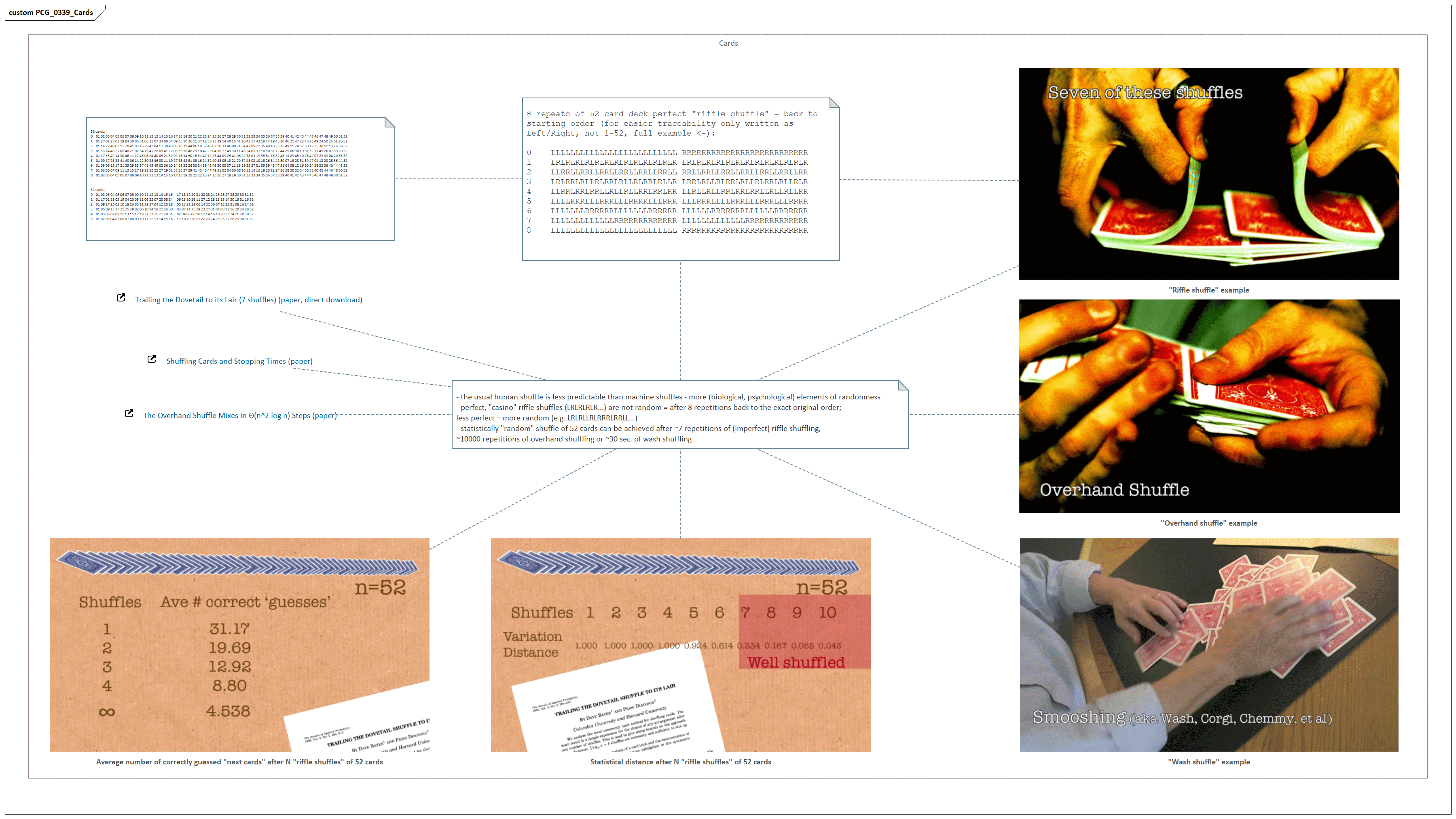
PCG_0339_Cards_8b.png

External sources (papers) on the subject:

  • Trailing the Dovetail to its Lair (7 shuffles) (paper, direct download)
  • Shuffling Cards and Stopping Times (paper)
  • The Overhand Shuffle Mixes in Θ(n^2 log n) Steps (paper)


Team vision

As part of working on this project, we wanted to focus mainly on and gain experience in the following areas:

  • the basics of 3D modeling in general, 3D modeling tools and subsequent printing-related software,
  • try out 3D printing and pre-print optimization in practice,
  • creating a tangible product / prototype (as programmers / CS students, we usually only create software) that we could potentially later even use for our own statistical experiments.


Strategy and specification

At the beginning of the project, we identified / determined the following major steps:

  1. problem analysis, getting to know similar existing solutions, specification,
  2. 3D model design inspired by existing solutions,
  3. identification and procurement of necessary external components (engine, gears) compatible with our model,
  4. 3D Model printing, prototype assembly (incl. drive and power supply),
  5. prototype testing.

Our final goal was to create a device capable of mixing standard decks of 52/32 playing cards mechanically (using the "riffle shuffle" method) powered by an electric motor and a battery.


Existing solutions

We drew inspiration from multiple existing 3D-printed card shuffler solutions, for example:

  • Manual Playing Card Shuffler by RockstarAlchemist


Implementation

Initial design

We started by creating a v0.1 design sketch of the expected device:
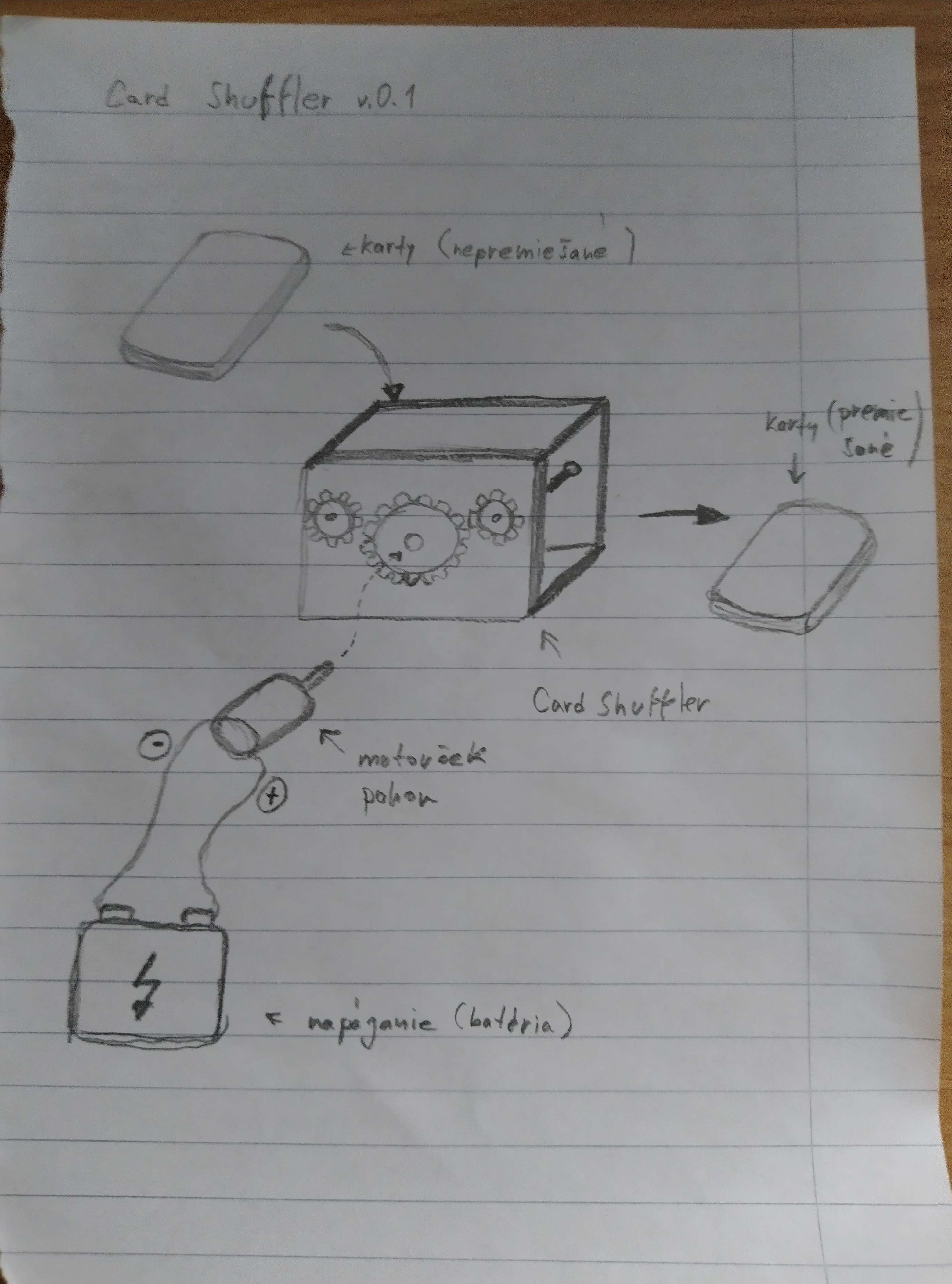
CardShuffler_nakres.jpg

As can be seen in the sketch above, the original design included a single motor and a gear/transmission mechanism for force transfer. In later phases, these choices were superseded by a two-motor design.


3D design

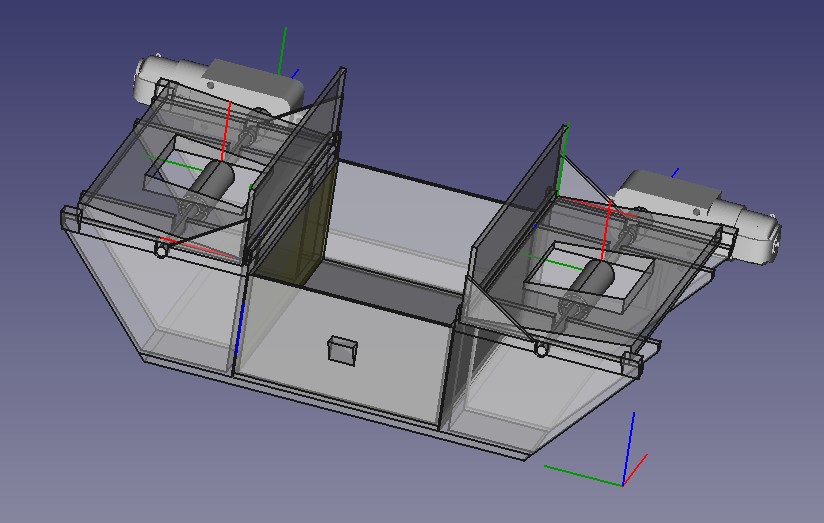
During the modeling phase, we went over the total of 7 full iterations of prototype design. We used FreeCAD as our 3D CAD modeling tool and PrusaSlicer for STL-to-G-code conversion and printing optimization. Select pictures of the last iteration of all parts can be seen below; STL files and full documentation are available at the WikiFactory repository.

Process of designing one section of the 3D model in FreeCAD (shuffler body):

SMVIT_FreeCAD_Nahlad_2.png


Final iteration

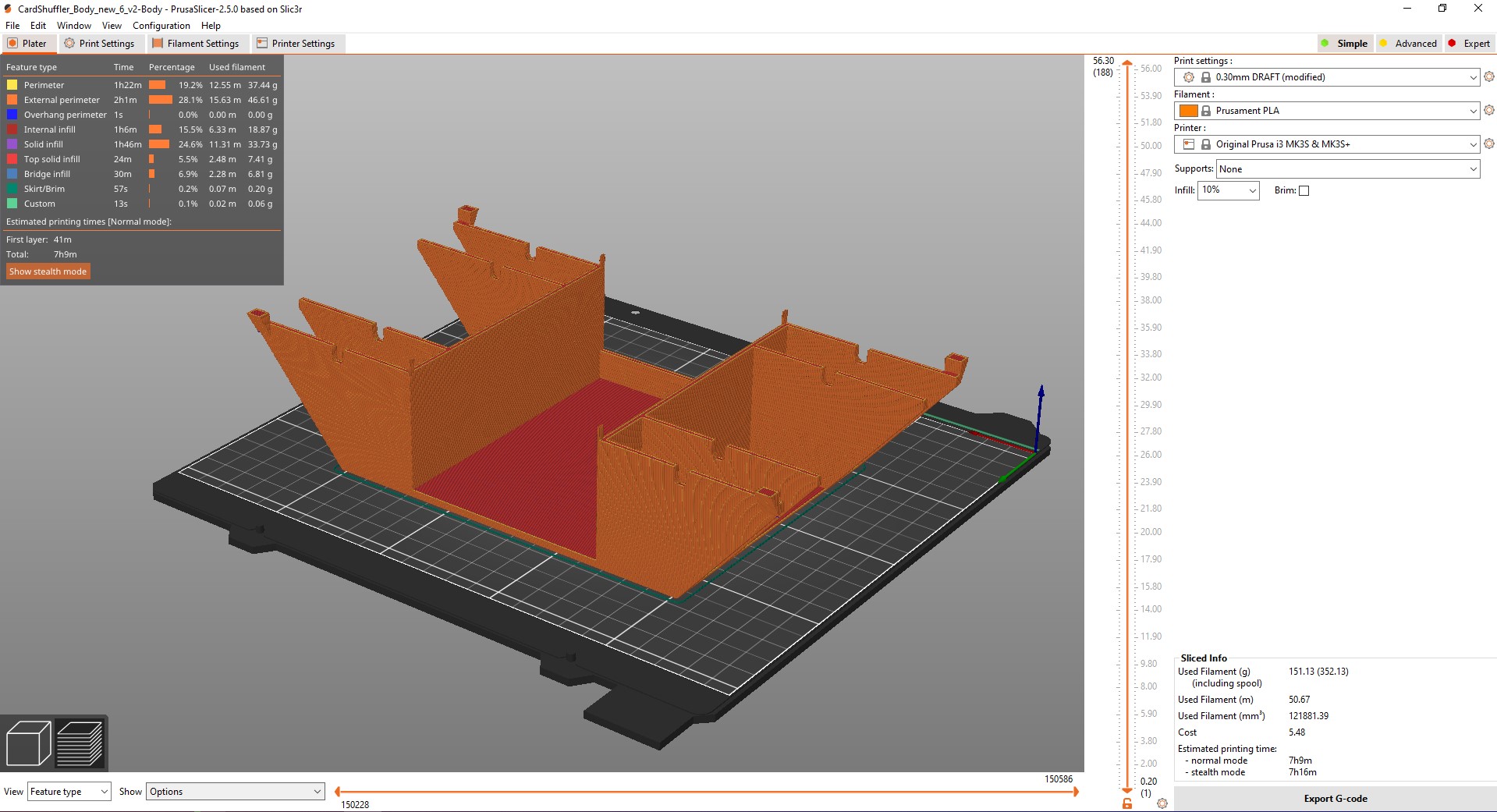
Body

CardShuffler_Body.jpg


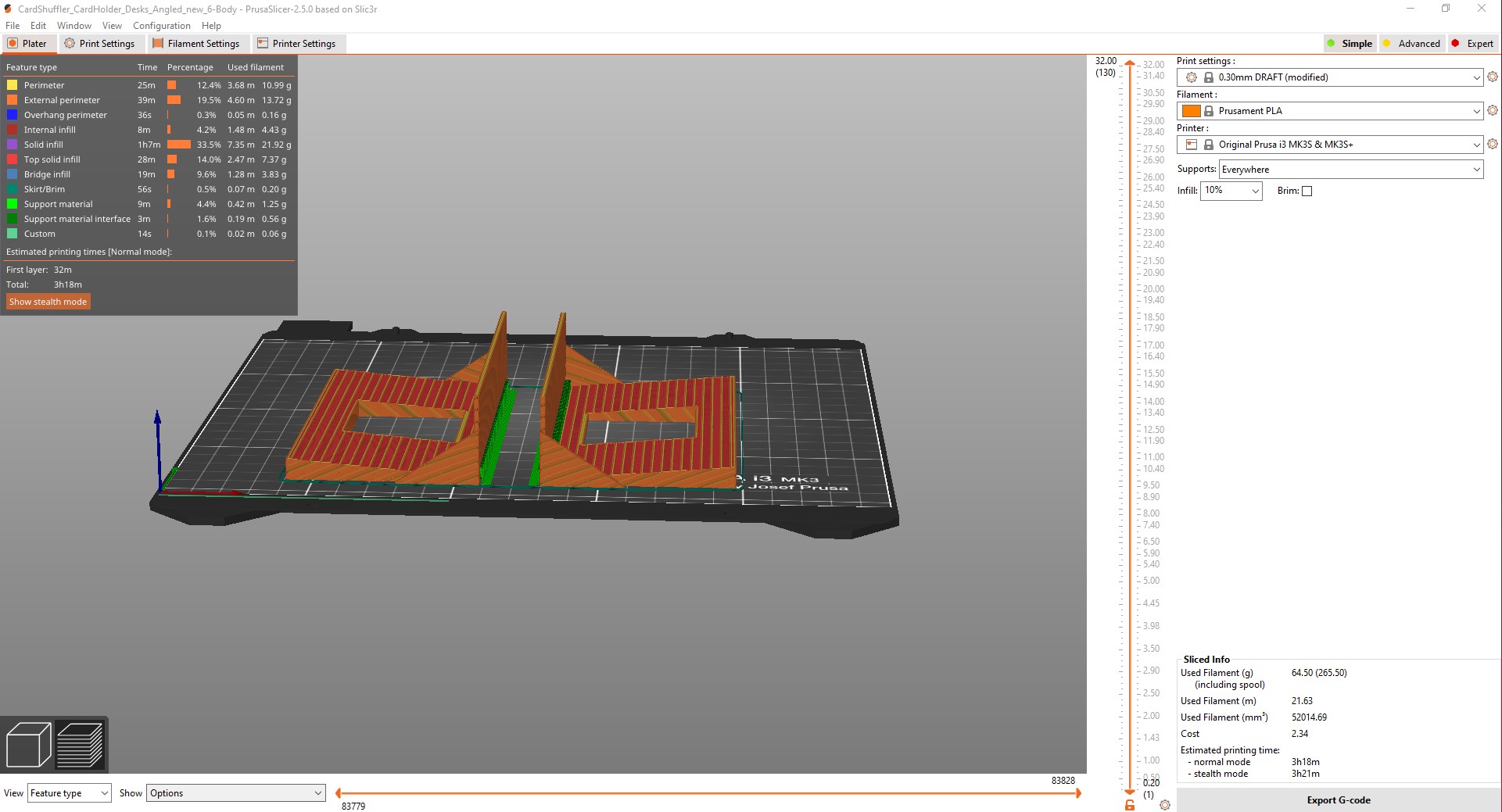
Card holders

CardShuffler_Desks.jpg


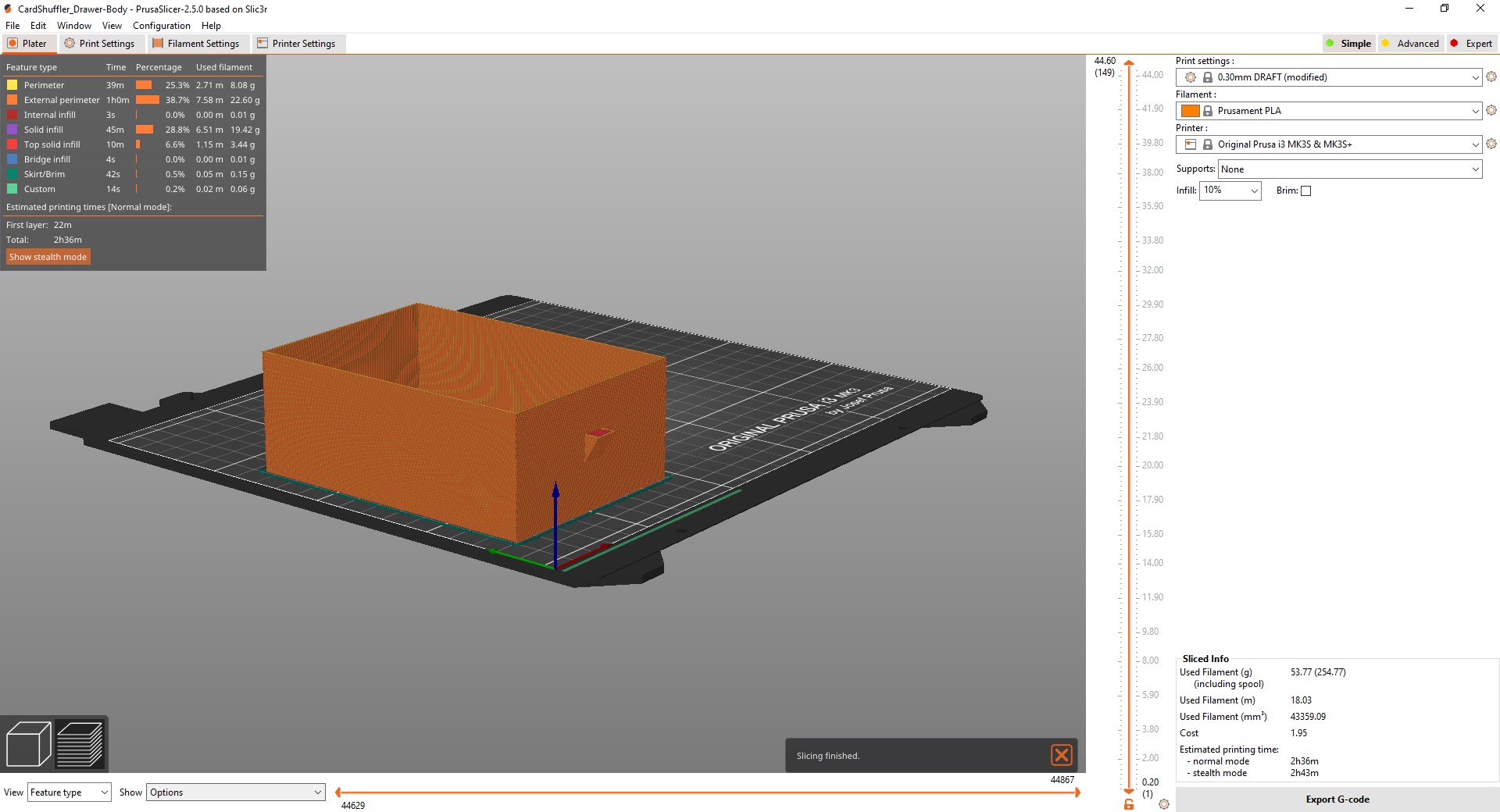
Drawer

CardShuffler_Drawer.jpg


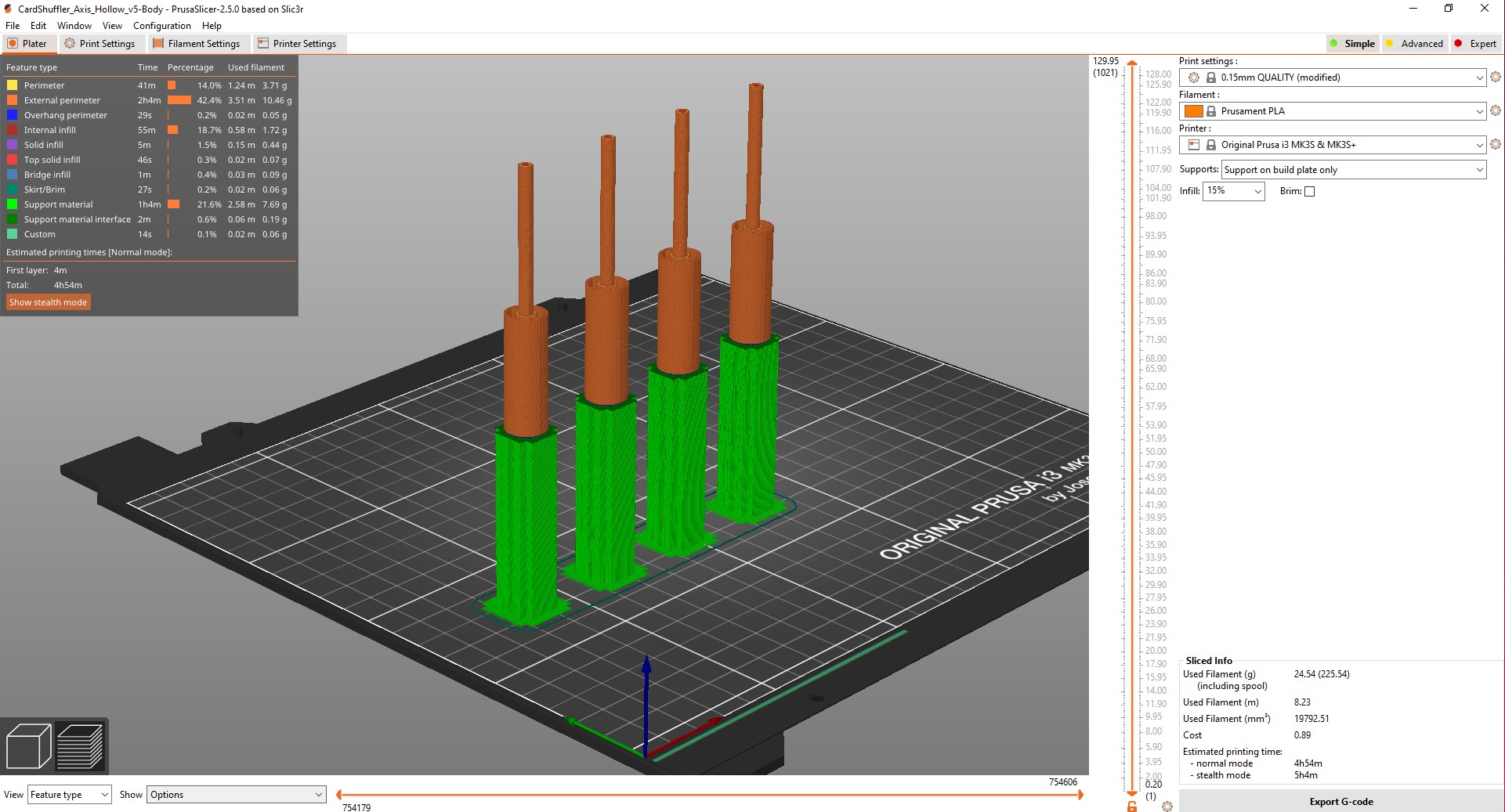
Axes

CardShuffler_Axis.jpg


Fully assembled model

(FreeCAD + Assembly4 extension, incl. motor models)
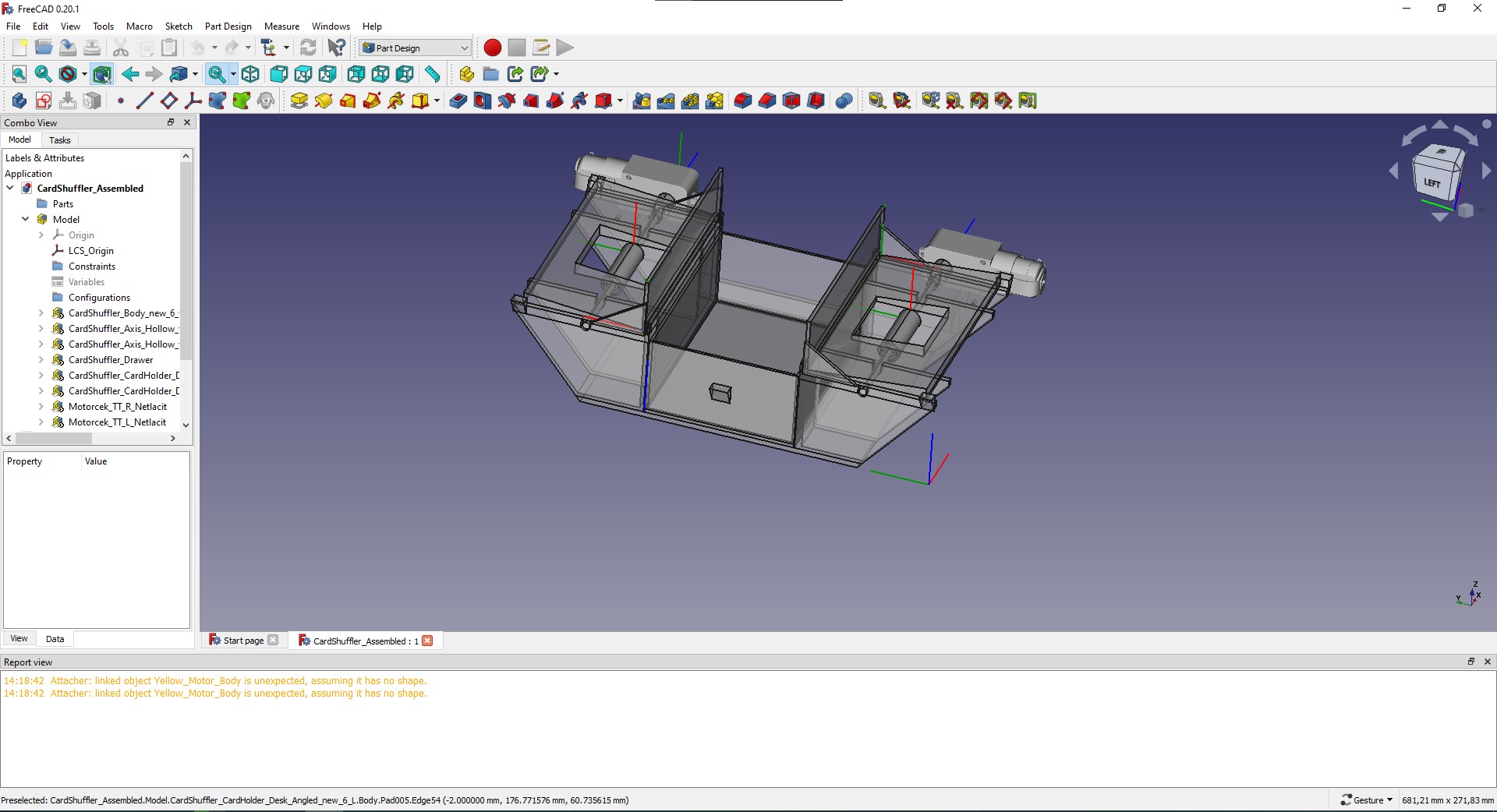
SMVIT_FreeCAD_Nahlad_3.jpg


External components

Outside of 3D-printed parts of our design, a single common 9-volt battery, electrical switch, two motors (LaskaKit LA143059) and necessary wiring to power the device were also used.


Assembly

Assembly of the 3D-printed parts went mostly according to expectations; however, the motor holders (which were reworked and diminished in one of the prototype iterations in order to cut back on material costs and printing time; see below) proved to be too small to reliably hold the motors, especially when turned on.
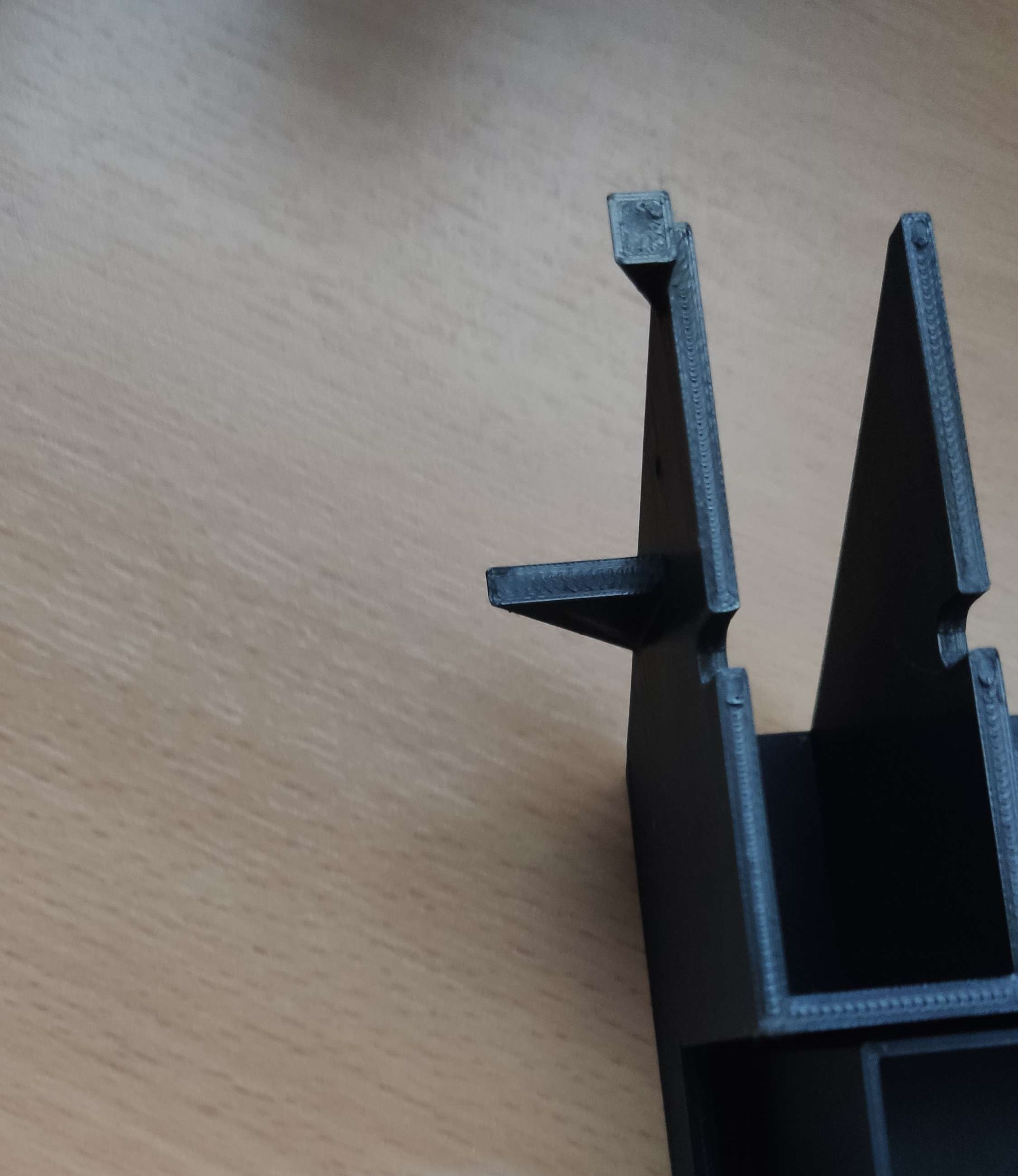
IMG_20230124_161313.jpg

The originally intended wiring method (series) had to be also switched for a parallel alternative in order to even out motor speeds (see example videos at the WikiFactory repository).


Testing

Issues identified

During the final testing, one major issue was identified - the cards were not moved quickly / far enough to slide through the gap between the card holder and central shuffler area. Due to the gap being too large, too many cards managed to get into the gap at the same time and got stuck on occasion. Furthermore, some of the friction-induced kinetic energy was often wasted on card rotation instead of merely pushing the cards into the central area.
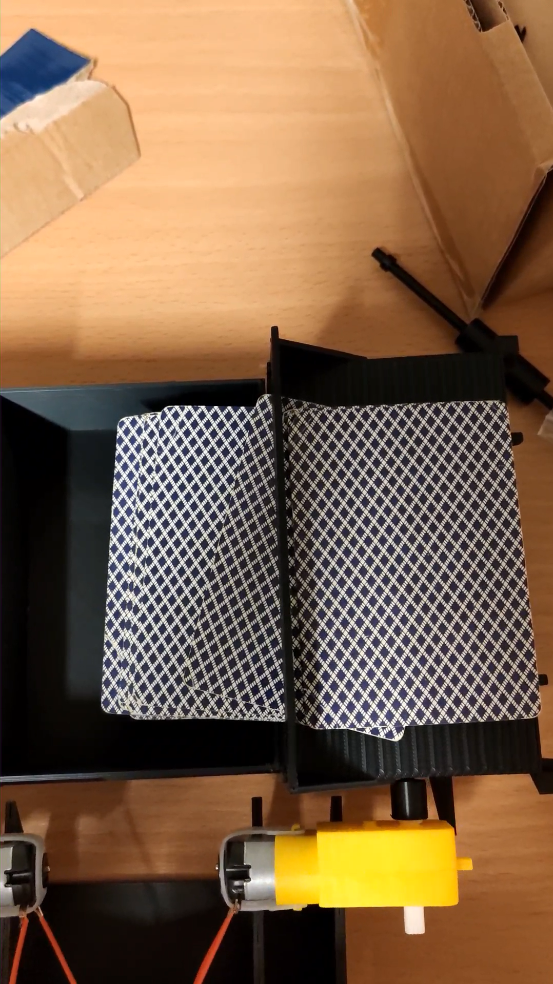
VID_20230124_194537_issue.png

Some alterations were made to mitigate these issues, but only with partial success, such as moving the axes closer to the gap, limiting card rotation (see temporary solution below) and using various materials to increase their friction (masking tape, insulation tape, silicone or rubber bands). Due to time- and tool-related constraints, re-printing of the relevant 3D parts or ordering stronger motors was not possible in time.
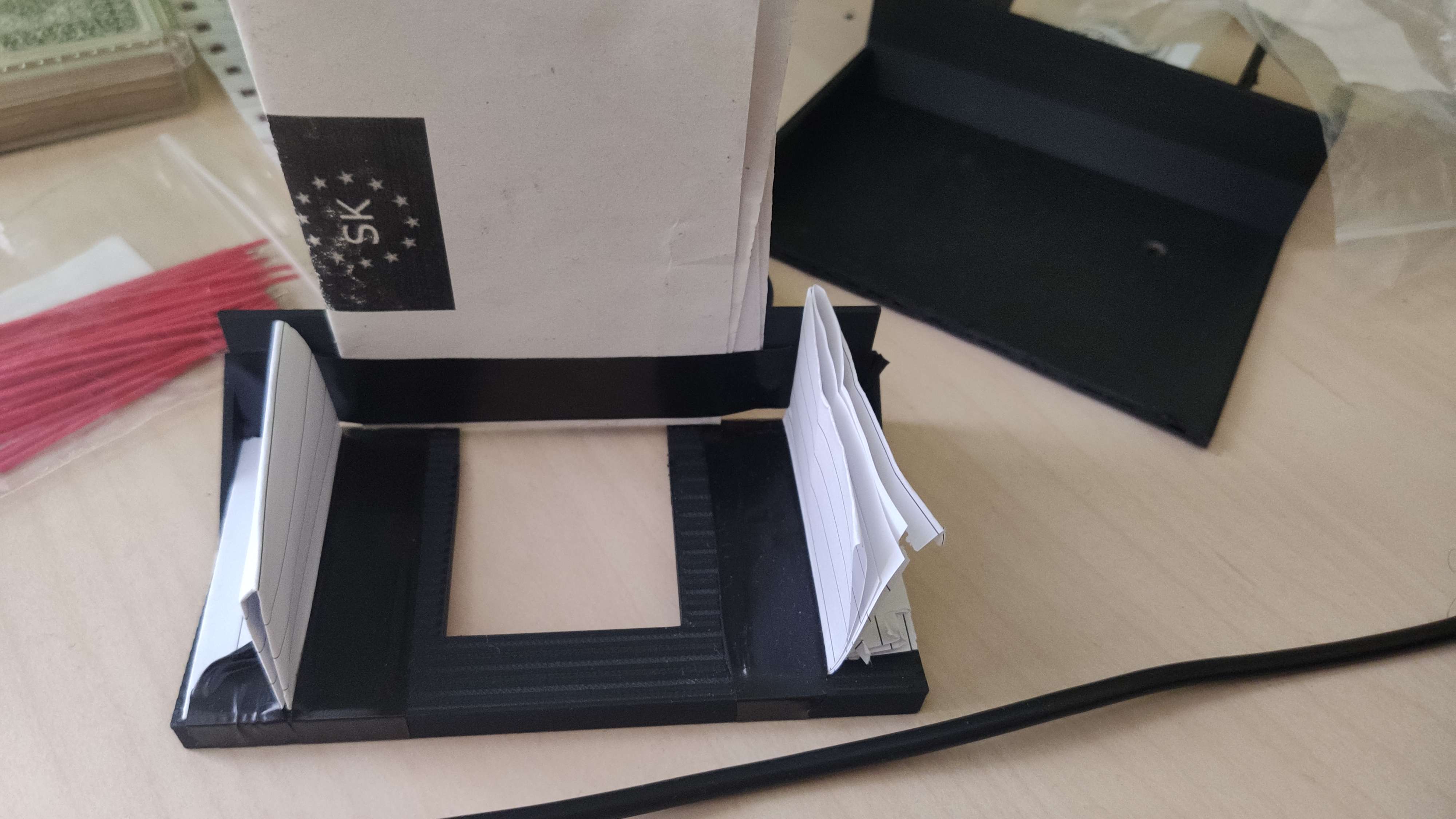
IMG_20230129_102950.jpg


Recommended solutions

We would recommend the following improvements to mitigate some of the issues faced:

  • narrow the gap which the cards fall through to the central section (to force fewer cards to go through at any given time),
  • introduce a more permanent solution to undesirable card rotation directly in the 3D model,
    • ideally movable/detachable/customizable, as card sizes differ.
  • Návštevy: 682

Ďalšie články…

  1. P02-2022-S09-S11-S17:Chladiaca podlozka
  2. P03-2022-S15-S19-S22:Deafinity-Doorbell-for-people-with-impaired-hearing
  3. P04-2022-S16-S24:Messenger
  4. P07-2022-S08-S13:QuadFinder

Podkategórie

2022/2023- Študenti Počet článkov:  5

2022/2023-Projekty Počet článkov:  11

Strana 1 z 3

  • 1
  • 2
  • 3


© 2023 by JoomLead. All rights reserved.
  • Systémové myslenie v IT a Digitálna Fabrikácia
    • 2017-2018
    • 2018-2019
      • 2018-2019-Študenti
    • 2019/2020
      • Študenti
      • Projekty
        • 2019_P01
        • 2019_P02
        • 2019_P03
        • 2019_P04
        • 2019_P05
        • 2019_P06
        • 2019_P70
        • 2019_P08
        • 2019_P09
    • 2020/2021
      • 2020/2021-Studenti
      • 2020/2021-Projekty
    • 2021/2022
      • 2021-2022-Študenti
      • 2021-2022-Projekty
    • 2022/2023
      • 2022/2023-Studenti
      • 2022/2023-Projekty
    • 2023/2024 2023/2024
  • Prednášky
  • Systémové myslenie pri tvorbe IoT riešení
  • Kurzy
  • Workshopy
  • Kybernetické riešenia - Kybernetickým spôsobom
    • Finančná gramotnosť v inteligentných riešeniach-úvod